


Ashcombe Farms South Community Bird Walk & eBird Training Report
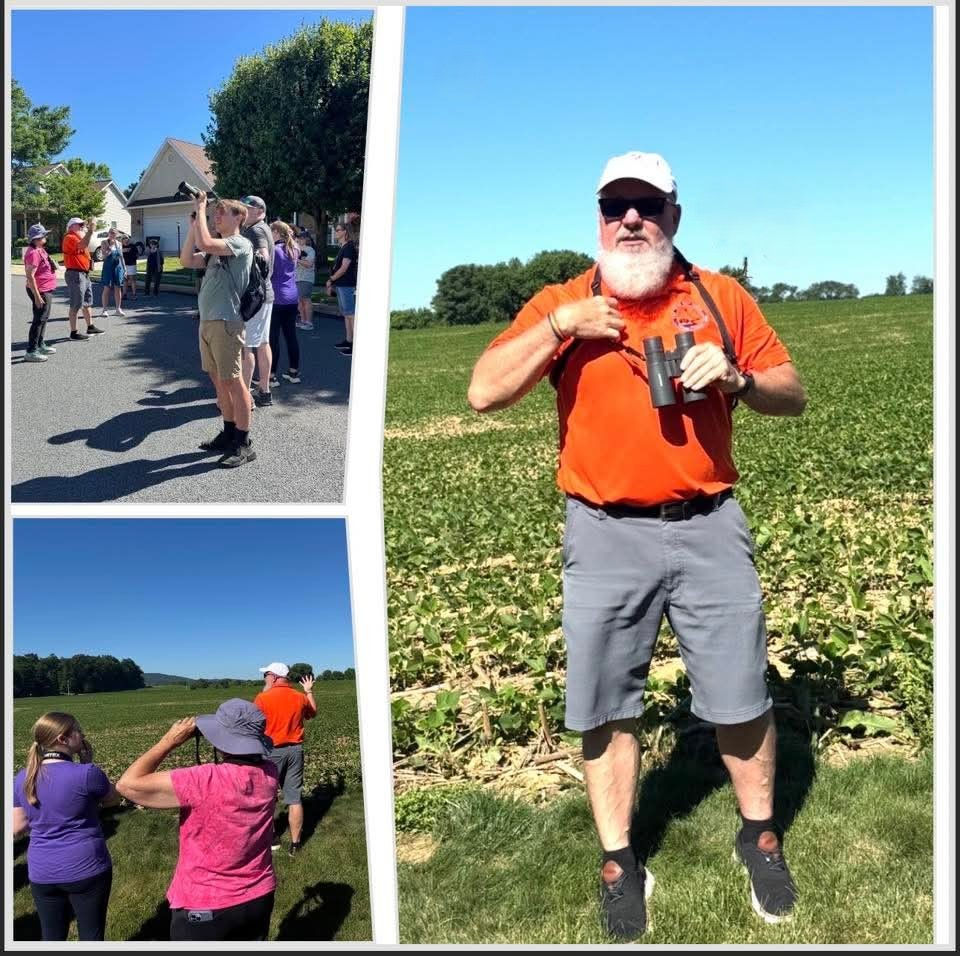
Our Ashcombe Farms South Community Bird Walk & eBird Training brought together 34 local residents for a morning of community science, bird identification, and environmental advocacy. The event was designed not only to enjoy neighborhood birdlife but also to train residents to collect high‑quality eBird data that can help evaluate and challenge the proposed data center project.
The proposed development site lies within 100 yards of Trout Run Nature Preserve, a protected habitat managed by the Appalachian Audubon Society. Trout Run forms part of a nearly one‑mile marshland corridor, supporting wetlands, riparian buffers, and breeding areas for dozens of bird species.
Because of this proximity, documenting bird activity in the surrounding area is essential for understanding — and communicating — the potential ecological impacts of the proposed development.
Why This Training Matters
The Trout Run marshland complex is one of the most ecologically valuable features in our region. Its wetlands provide:
Nesting habitat for wrens, blackbirds, and sparrows
Feeding grounds for swifts, flycatchers, and insect‑dependent species
Shelter for migrating songbirds
Seasonal breeding territories for numerous native birds
Any large‑scale development so close to this system risks disrupting:
Water flow and hydrology
Insect populations
Nesting and fledgling success
Habitat connectivity along the stream corridor
To advocate effectively, we need verifiable, timestamped, location‑specific data showing how birds use the landscape surrounding the preserve and marshland. eBird provides exactly that.
By teaching residents how to enter accurate observations, we are building a community‑powered dataset that can be submitted to the township as part of the public record.
What We Documented
During the walk, participants recorded 27 species using eBird Mobile. These observations now contribute to a growing dataset that reflects real bird activity near the Trout Run marshland system.
Highlights included:
Chimney Swifts feeding overhead, with a pair observed flying in and out of an old farmhouse chimney
Red‑winged Blackbirds actively defending marsh‑edge territories
American Robins feeding fledglings throughout the neighborhood
A brilliant Indigo Bunting singing persistently from a hedgerow
Cedar Waxwings moving through in small flocks
Northern Flicker heard early but not seen
Carolina and House Wrens vocal and active along the route
Full checklist: 👉 https://ebird.org/checklist/S356713544
These data points — species counts, behavior, time, and location — are exactly the type of evidence needed to illustrate how birds are using habitat adjacent to the Trout Run Nature Preserve and its upstream marshland.
Key Bird Species Observed & How They May Be Impacted
As our dataset grows, several species stand out as indicators of the ecological value of the Ashcombe Farms South landscape. Many rely directly on the open fields, hedgerows, and early‑successional habitat that would be removed or fragmented by the proposed data center complex.
Species of Interest & Potential Impacts
Eastern Meadowlark — A rapidly declining grassland species that depends on large, open meadows for nesting. The loss of field habitat would likely eliminate this species from the site entirely.
Field Sparrow — Prefers shrubby edges and regenerating fields. Development would remove the transitional habitat this species requires, reducing local breeding opportunities.
Red‑tailed Hawk — Frequently observed hunting over the open fields. Construction activity, lighting, and increased traffic would disrupt hunting patterns and reduce prey availability.
Tree Swallow — Feeds on flying insects over open land. Habitat loss and reduced insect abundance during construction would directly affect foraging success.
Carolina Wren & Northern Cardinal — Adaptable residents, but still vulnerable to habitat compression and increased competition as natural cover is removed.
Killdeer — A ground‑nesting species that uses gravel and short‑grass areas. Construction poses direct disturbance and nest‑site mortality risks.
Brown Thrasher — A Pennsylvania species of conservation concern that relies on dense thickets. Clearing and fragmentation would eliminate the very habitat structure it needs.
Why These Species Matter
Collectively, these birds represent:
Grassland health
Shrubland and edge habitat quality
Insect abundance
Predator–prey balance
Nesting success across multiple habitat types
Their presence — and potential displacement — provides a clear, science‑based argument for why the proposed development poses significant ecological risk.
eBird Skills Learned
Attendees practiced:
Starting and submitting a mobile checklist
Tracking distance and duration
Entering accurate species counts
Adding behavior notes and breeding codes
Understanding how eBird data is used by conservation groups and local governments
Many participants submitted their first‑ever eBird checklist, directly contributing to our community’s environmental advocacy efforts.
Community Impact
This event wasn’t just a bird walk — it was a training session in data‑driven conservation.
The information collected will help us:
Document wildlife activity near the Trout Run Nature Preserve
Highlight the ecological importance of the mile‑long marshland corridor
Identify sensitive habitat areas
Provide evidence‑based feedback to the township
Ensure that development decisions consider ecological impact
Your participation helps ensure that local voices and local data are part of the decision‑making process.
Thank You
Thank you to everyone who attended, asked questions, and contributed observations. Your involvement strengthens our community and supports the mission of protecting the natural character of Ashcombe Farms South, Trout Run Nature Preserve, and the surrounding marshland ecosystem.
More walks and training sessions will be scheduled soon — each one building our shared dataset and strengthening the case for responsible land‑use decisions in Monroe and all surrounding Townships.
Andrew Dapkins
Owner and Guide


Comments